How you store your Christmas lights in January decides how much you'll swear at them next November. Tangled, kinked, crushed strands are the number-one reason lights fail year to year. Here's how to store them so they last — and come out ready to hang.
Why proper storage matters
LED strands can last many seasons — but only if the wiring and connectors survive storage. Wadding lights into a box stresses the wire, loosens bulbs, and creates the tangles that tempt you to yank (which breaks connections). Five minutes of proper storage saves an hour of untangling and a trip to the store for replacements.
Plug each strand in before packing it away. It's far better to discover a dead strand in January and toss it than to haul out a non-working strand next Thanksgiving when you're already on the ladder. Label anything that needs replacing.
The single most important habit: wind each strand neatly instead of balling it up. Good options include wrapping around a flat piece of cardboard, a dedicated light reel, or even an empty wrapping-paper tube. Secure the end so it can't unravel. This one change eliminates almost all tangling.
Store lights in a sealed, rigid container — not a thin bag that pests can chew through. Keep them somewhere climate-stable; attics that hit extreme summer temperatures can degrade insulation and connectors over time. Add a desiccant pack if your storage area gets humid.
Tag each bundle with where it goes — "front roofline," "left oak," "garage gable." Next year's install goes dramatically faster when you're not guessing which strand belongs where. Keep clips in labeled bags inside the same bin.
Wrap each strand around a reel or stiff cardboard rather than balling it up — tangles and crimped wire are the #1 reason lights fail the next season. Label by zone so reinstall is fast.
A simple 5-step storage method that actually works
The difference between lights that work next year and a tangled box of dead strands comes down to a repeatable routine. Here is the exact process our crews use when we store thousands of feet of client lights every January:
Plug in every strand and confirm all bulbs light. It is far easier to replace a bad fuse or bulb now than to discover a dark section while you are on a ladder next November.
Wipe off dirt, cobwebs, and moisture, then let strands air-dry completely. Sealing away even slightly damp lights invites corrosion at the sockets and connectors over a long Texas summer.
Wrap each strand around a dedicated cord reel, a strip of stiff cardboard, or an empty bucket. Never ball them up — knots crimp the copper wire inside and that is the number-one cause of strands failing the next season.
Tag each reel with exactly where it goes: "front roofline," "left oak," "garage path." Reinstall the next year becomes a 20-minute job instead of an afternoon of guesswork.
Place the labeled reels in a hard-sided, lidded tote — not a thin bag. Add a couple of silica packs to fight humidity, and keep the bin off a hot garage floor if you can.
Common storage mistakes that kill your lights
Most strands do not die from use — they die in storage. These are the mistakes we see most often when homeowners hand us a box of lights that "just stopped working":
- Balling up the strands. Tangles put sharp bends in the internal wire. Over months in storage those bends fatigue and break the circuit.
- Storing them damp. Texas garages swing from humid to scorching. Moisture trapped in a sealed bin corrodes sockets and rusts the contact points.
- Using thin plastic bags. Bags tear, let pests in, and let strands shift and crush each other. Rodents in particular love to chew light wiring.
- Mixing everything into one giant box. Without labels, you spend reinstall day untangling and testing instead of decorating.
- Storing near heat sources. A water heater, attic, or sun-baked garage wall can soften insulation and shorten LED life.
Storing Christmas lights in the Texas climate
North Texas storage has its own challenges. Garages and attics here can pass 120°F in summer, and humidity swings are hard on electrical connections. A few climate-specific habits go a long way:
Keep bins in the coolest, most stable spot you have — an interior closet or a shelf off the floor beats the attic. Add silica gel or a small desiccant pack to each container to absorb the humidity that causes corrosion. And if you store anything outdoors or in an unconditioned shed, double-check that the container is fully sealed against both water and pests before the season ends.
Photograph your display before takedown. A few quick phone photos of each lit area make it obvious where every labeled bundle goes when you reinstall — no second-guessing, no leftover strands.
The easiest storage solution: let someone else handle it
Here's the option most people don't consider: with professional service, you never store lights at all. A full-service installer takes the display down in January, inspects and repairs it, and stores it in climate-controlled space until next season — so your garage stays clear and your lights stay perfect. Our takedown and storage service is included in our fully managed installations.
Never store lights again.
We install, maintain, take down, and store your display across Dallas, Plano, Frisco & DFW — your garage stays empty, your lights stay flawless.
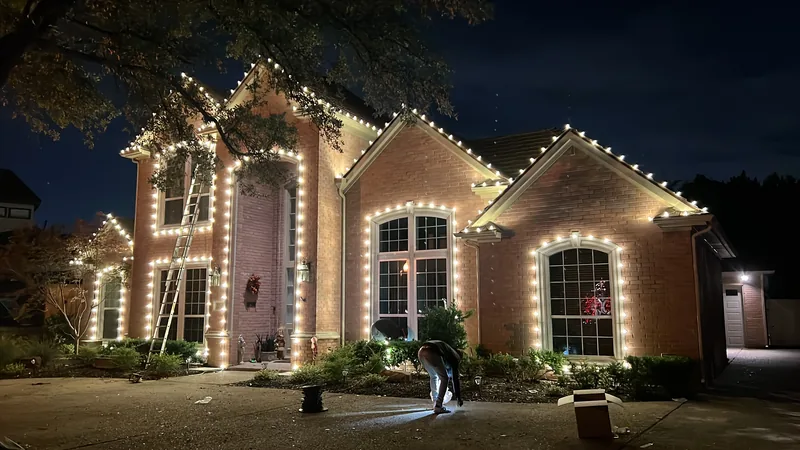
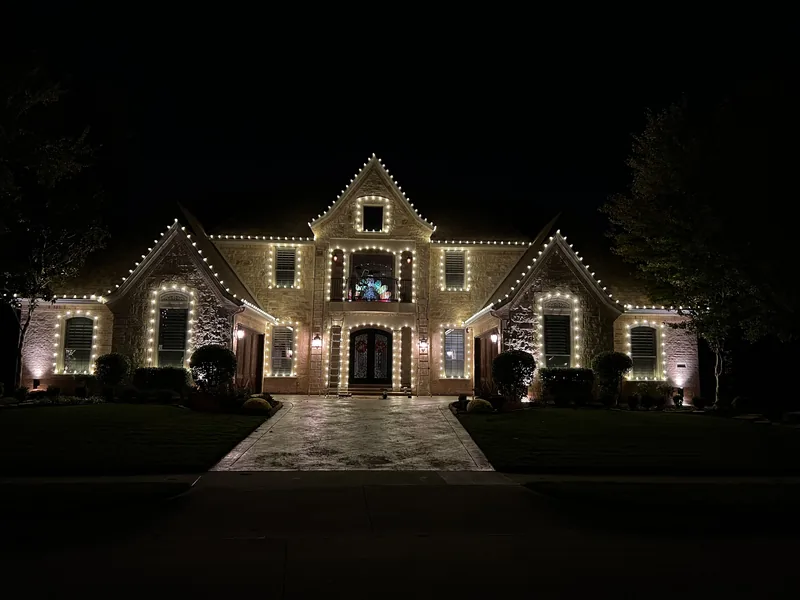
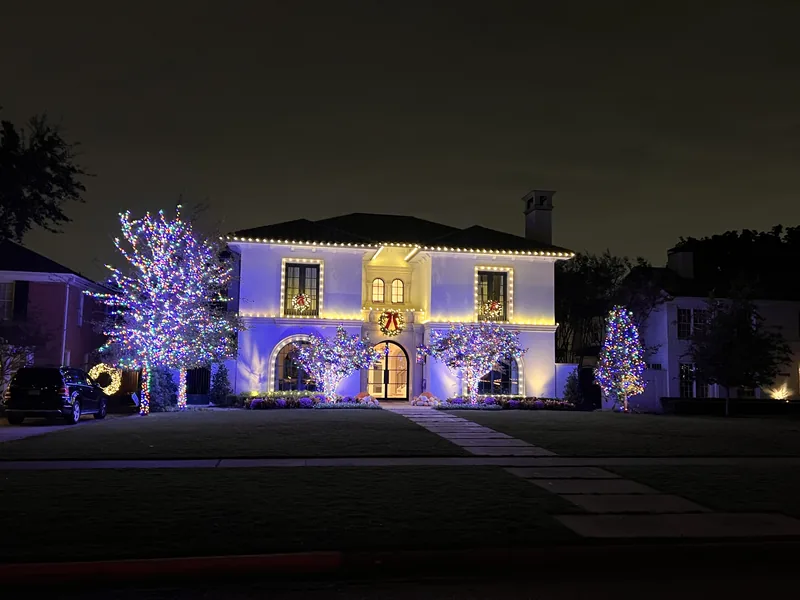
Get a Free Quote →From single-story rooflines to tall two-story estates — every home professionally measured, installed, and taken down by our insured crews.
Frequently asked questions
What's the best way to store Christmas lights without tangling?
Wind each strand around a flat piece of cardboard, a light reel, or an empty wrapping-paper tube, and secure the end. Never ball them up — that's what causes the tangles and stresses the wiring.
Can I store Christmas lights in the attic?
You can, but extreme attic heat can degrade insulation and connectors over time. A climate-stable spot in a sealed, rigid container is better. Add a desiccant pack if it gets humid.
How long do LED Christmas lights last if stored properly?
Quality LED strands can last many seasons when wound neatly, kept dry, and protected from extreme heat and pests. Poor storage — balling, crushing, moisture — is the main reason lights fail prematurely.
Should I test Christmas lights before storing them?
Yes. Test each strand before packing it away so you can discard or label dead ones now, rather than discovering the problem next year while you're on the ladder.
Do professional installers store your Christmas lights?
Yes — with our fully managed service, we take down your display in January, inspect and repair it, and store it in climate-controlled space until next season, so you never store lights yourself.
Three ways to get started today.
Phone or Text
Call or text us directly at (469) 970-2715. Real person, same-day response, no obligation. Often the fastest path to a detailed quote.
Call now →Email thechristmaslightsexperts@gmail.com with your address and brief description. We respond same-day with detailed itemized pricing.
Get a Fast Quote →Online Quote Form
Submit our online quote form with property details. Convenient for thorough information sharing. Same-day response guaranteed.
📋 Quote form →For a simple roofline question or you're planning a full multi-acre estate installation, we respond same-day with the information you need. No high-pressure sales, no obligation, no follow-up calls if you decide not to proceed. Just honest professional service — which is why 86% of our tracked 2024–25 customers booked us again for 2025–26.

Ready for a
professional display?
Tell us about your home and we'll respond same day with a custom design and quote — concierge service, zero hidden fees, no obligation.
Or call/text directly: (469) 970-2715
Ready to make your home unforgettable?
Free same-day quote. No obligation. We respond fast and treat your home like our own.